Showing posts with label Fish facts. Show all posts

Friday, February 28, 2014

Fish Facts - Part 4 (final)


Sole

According to Dr. Smith, “when it comes to your heart, forget the sole (and flounder).  Although this flatfish isn’t particularly detrimental, it doesn’t boast many advantages either.  Sole has one of the lowest concentrations of omega-3s and therefore offers the least nutritional benefits to Baby Boomers.  Instead, swap for fish with higher levels of heart-healthy omega-3s which significantly boost memory and recall, reduce inflammation and promote healthier heart function.


OK – We’ve read about the fish that is bad for us.  Now I want to know what fish is actually good for us.
According to Dr. Brill, “there are plenty of fish and shellfish that have tons of nutritional benefits with minimal mercury.  Omega-3-rich fish and seafood that’s low in mercury includes wild caught salmon, shrimp, sardines, trout, herring, and oysters.”

It’s not only important to be aware of how fish affects your health, but how your seafood choices affect the environment.  Many irresponsible fishing practices have led to species endangerment and habitat depletion.  The Monterey Bay Aquarium has started working with fisheries and fish farms worldwide to maintain a “Seafood Watch” database.  This program considers habitat, species, management and other factors in order to recommend seafood “best choices” and “what to avoid.”   Hopefully the fish we consume in the future will be safer raised, caught and healthier for us to consume. 

Now, for my taste buds, I’m just out of luck.  I love all of the fish mentioned as being bad, except for the Farmed Salmon.  I only buy that which states that it is not farm raised or that it comes from deep ocean waters.  The shrimp and trout I love but anyone that wants can have my share of sardines, herring and oysters.  The worse part of these findings bring to light that no matter what, we’ll never know where our fish in the restaurants and stores truly come from.


Wednesday, February 26, 2014

Fish Facts - Part 3


Farmed Salmon

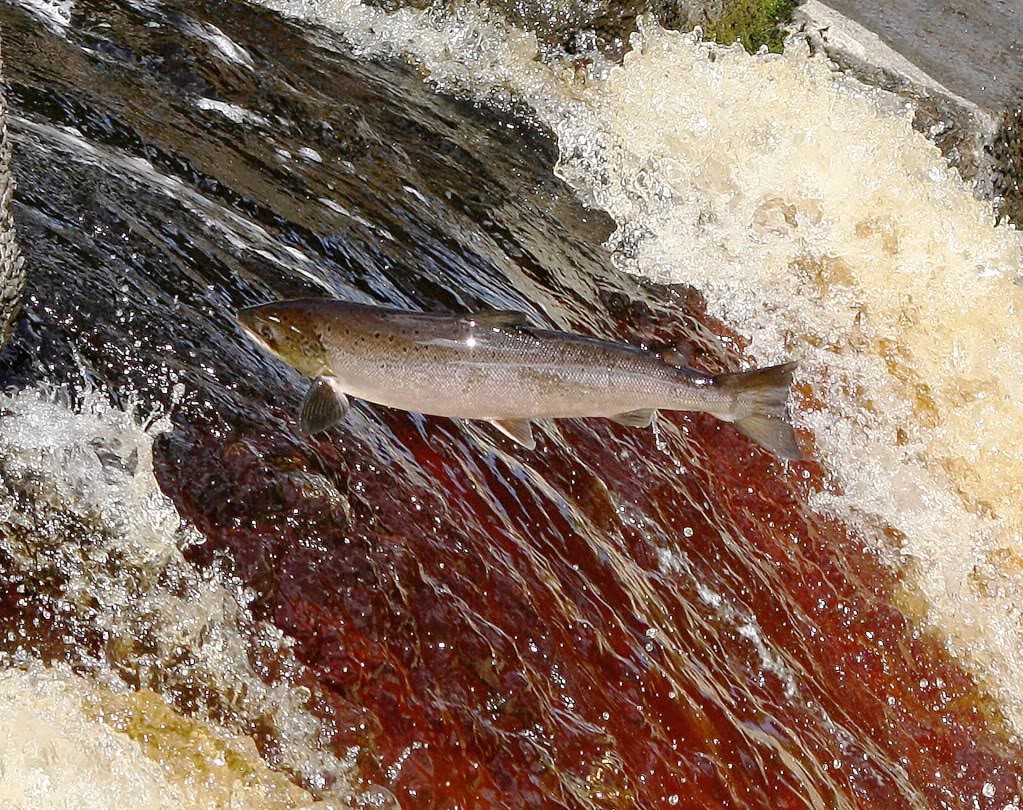
Another one of my favorite!  According to a report in Science, factory-farmed salmon*, which is raised on fishmeal and accounts for 80% of the market, has eight times more PCBs than wild caught.  The researchers said that if EPA standards could be applied to farm-fed salmon, it would trigger a warning to not consume it at all.  In order to protect yourself from PCBs, never eat salmon skin or the layer of fat beneath it.   *conditions and practices vary by farm, which can affect the PCB levels.

What is Farmed Salmon?  The most commonly farmed salmon is the Atlantic Salmon.  Salmon is usually farmed in 2 stages and in some place maybe more.  First, the salmon are hatched from eggs and raised on land in freshwater tanks.  When they are 12 to 18 months old, they are transferred to floating sea cages or net pens anchored in sheltered bays along a coast.  They are fed pelleted feed for another 12 to 24 months, when they are then harvested.  Norway produces 33% of the world’s farmed salmon, and Chili produces 31%.  The coastlines of these countries have suitable water temperatures and many areas are protected form storms.  Chile is close to large forage fisheries which supply fish meal for salmon.  Scotland and Canada are also significant producers.


Tilapia

This freshwater favorite has a mild flavor and is very versatile, but unfortunately, the benefits end there.  Most tilapia is farm-raised and fed a steady diet of corn which, in turn, affects its nutritional content.  Jeffrey Anshel, O.D., F.A.A.O says “Despite what we think, corn is not a vegetable, but actually a grain that has a high glycemic rating.  This means that it spikes your blood insulin, which is especially a problem for diabetics.  Addionally, tilapia has the highest level of omega-6, the pro-inflammatory fish oils.  Omega-6 can exacerbate heart disease, arthritis, asthma, and other overactive inflammatory responses.”


According to Wikipedia, Tilapia from aquaculture (farmed) has been shown to contain more fat and a much higher ratio of omega-6 to omega-3 oils.  I’m assuming this is due to their feeding and lack of activity.

Tuesday, February 25, 2014

Fish Facts - Part 2


Tilefish, Swordfish, Shark and King Mackerel

The U.S. Environmental Protection Agency recommends eating fish with mercury levels that are less than 0.5, but each of these exceed that number.  Tilefish (1.45), Swordfish (0.995), Shark (0.979), and King Mackerel (0.730).  The EPA suggest you never eat either of these fish more than once a month.  According to Charlie Seltzer, MD, Anti-aging Specialist, “regular consumption can cause mercury toxicity, which can lead to severe memory, hearing, speech, vision and coordination issues.

Tuna

This is one of my favorite so it was with great disappointment that I found it as one of the bad fish.  It can be consumed but very carefully.  Due to its extensive appeal and widespread availability, most canned tuna manufacturers depend on longline fishing for hefty hauls.  According to Dr. Seltzer, “big fish eat small fish.  So the top of the food chain, including adult albacore, has higher levels of contaminants from the fish below them.  Troll or pole fishing tend to catch younger fish with lower levels of mercury so check the packaging of your canned tuna to make sure that it has not been caught with a longline and be sure to eat no more than one 6 oz. serving per week.”

So what is a longline? 
It uses a long line, called the main line, with baited hooks attached at intervals by means of branch lines called snoods.  A snood is a short length of line, attached to the main line using a clip or swivel, with the hook at the other end.  Longlines are classified mainly by where they are placed in the water.  They can be at the surface or at the bottom.  Lines can also be set by means of an anchor, or left to drift.  Hundreds or even thousands of baited hooks can hang form a single line. 


I checked the cans of tuna I have in my pantry and none of the 2 brands tell how their fish is caught, nor where, and both brands are 2 of the leading.